
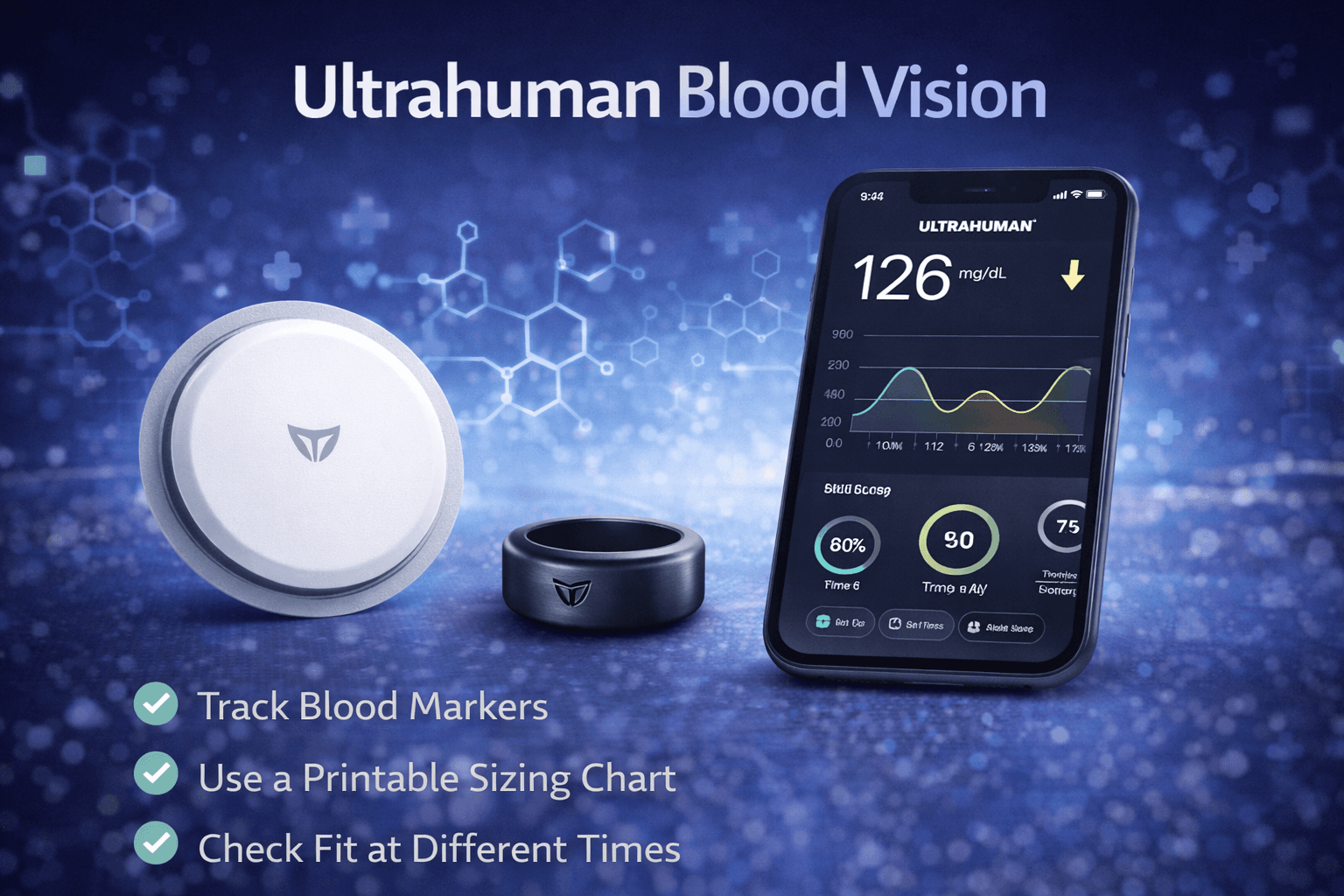
Ultrahuman Blood Vision
Mar 11 2026
Verdict: Blood Vision turns a standard blood test into a longitudinal health dashboard. The data is only as useful as the actions you take on it, but the integration with Ring and CGM data creates correlations no standalone lab panel provides.
I get blood work done twice a year. My doctor orders a basic metabolic panel, lipid panel, CBC, and thyroid function. The results arrive as a PDF with numbers, reference ranges, and a note that says "within normal limits." I file it, forget it, and repeat six months later. Ultrahuman Blood Vision is built for people who find that process inadequate. It tests 120+ biomarkers across metabolic, hormonal, inflammatory, and nutritional categories, then feeds the results into the same app that processes your ring and CGM data. Your blood chemistry stops being an isolated snapshot and becomes part of a continuous health picture.
I ran my first Blood Vision panel in February 2026. Here's what it revealed that my standard lab work had missed for years.
What Blood Vision Tests
The panel covers markers that most annual physicals skip entirely:
Metabolic Health: Fasting glucose, HbA1c, insulin, HOMA-IR (insulin resistance index), lipid subfractions (not just total cholesterol, but LDL particle count, apoB, Lp(a)), uric acid, and liver enzymes.
Hormonal Profile: Testosterone (free and total), estradiol, DHEA-S, cortisol, thyroid panel (TSH, free T3, free T4, thyroid antibodies), and sex hormone-binding globulin.
Inflammation: hs-CRP, homocysteine, ferritin, ESR, and white blood cell differentials.
Nutritional Status: Vitamin D, B12, folate, iron panel (serum iron, TIBC, transferrin saturation), magnesium, zinc, and omega-3 index.
Organ Function: Comprehensive metabolic panel, kidney markers (GFR, creatinine, BUN), and liver panel.
The exact biomarker list varies by region and availability. In India, where Ultrahuman originated, the panel is extensive and relatively affordable. In the US and UK, the scope depends on the local lab partnership.
Order Yours Ultrahuman Blood Vision Now!
My Results: What Standard Labs Missed
My regular annual labs showed cholesterol, blood sugar, and thyroid all "within normal limits." Blood Vision told a different story.
Vitamin D at 24 ng/mL. My doctor's threshold for "normal" starts at 30. Some endocrinologists consider optimal to be 40-60. At 24, I was deficient by any serious standard, but my annual physical never flagged it because the basic metabolic panel doesn't include Vitamin D.
DHEA-S at the 15th percentile for my age. Not clinically low, but trending in a direction that matters for long-term energy, mood, and hormonal balance. No standard annual lab tests for DHEA-S.
Homocysteine at 11.2 umol/L. Technically "normal" (reference range goes up to 15), but emerging research associates levels above 10 with increased cardiovascular risk. My annual cholesterol panel looked perfect. My homocysteine told me there was a methylation issue worth investigating.
Omega-3 index at 3.8%. Below the 8% target associated with reduced cardiovascular mortality. I thought I ate enough fish. I was wrong.
None of these findings were dramatic. All of them were actionable. I started Vitamin D supplementation (5,000 IU daily), added methylated B-complex for the homocysteine issue, and increased omega-3 intake through both food and supplementation. I'll retest in six months to track changes.
The Integration That Makes It Different
Standalone blood testing services exist. InsideTracker, Function Health, and Marek Health all offer comprehensive panels. What they don't do is integrate blood results with continuous wearable data.
Blood Vision feeds your biomarker results into the Ultrahuman app, where Jade AI can cross-reference them with your ring data and CGM readings. When I asked Jade to analyze the relationship between my low Vitamin D and my sleep patterns, it identified a correlation: my deep sleep percentage was consistently lower than my demographic average, and Vitamin D deficiency is associated with disrupted sleep architecture in published literature.
That's the kind of connection a standalone lab report cannot make. It requires continuous biometric data plus blood chemistry plus an AI system capable of querying across both datasets. Is it a substitute for a physician's analysis? Absolutely not. But it's a starting point for a more informed conversation with your doctor, armed with data most patients never bring to an appointment.
The UltraTrace Technology
Ultrahuman uses a proprietary collection method called UltraTrace for some biomarkers. Without going into technical detail (the specifics are proprietary), the goal is to reduce the blood draw volume needed while maintaining clinical-grade accuracy. In practice, the blood draw itself was standard. A phlebotomist collected samples at a partner lab. Results were available in the app within 5-7 business days.
Cost and Availability
Blood Vision pricing varies by market:
In India, the panel is priced competitively against standalone lab chains like Thyrocare or SRL. In the US and UK, pricing depends on the lab network and biomarker selection. Expect to pay $200-500 per panel depending on the scope. This isn't a monthly expense. Most users will test quarterly or biannually. At two panels per year, the cost is comparable to a single session with a functional medicine practitioner who would order similar (though often less comprehensive) bloodwork.
Tap in to place order and get instant discount!
Who This Is For
Biohackers and quantified-self enthusiasts who want longitudinal data across blood, wearable, and metabolic metrics in one platform.
Athletes tracking hormonal recovery, inflammation markers, and nutritional status alongside training data.
Preventive health advocates who want to catch trends before they become diagnoses. The difference between a Vitamin D level of 24 today and 18 next year is a supplementation decision, not a doctor's visit.
Ultrahuman ecosystem users who already own a Ring and want to maximize Jade AI's analytical capability. Blood Vision data is one of the primary inputs that unlocks Deep Research Mode's most powerful correlations.
Who Should Skip It
People on tight budgets. The Ring alone provides enormous health value. Blood Vision is a premium addition, not a necessity.
People with comprehensive insurance-covered lab work. If your annual physical already includes a 40-marker panel, Blood Vision adds incremental value, not transformative value.
People uncomfortable with blood draws. This requires a venous blood draw at a lab. It's not a finger prick.
FAQ
How often should I test?
Every 3-6 months for optimization tracking. Once a year for baseline maintenance.
Can I share results with my doctor?
Yes. The app generates exportable reports in standard medical formats.
Is Blood Vision available in my country?
Currently available in India, the UK, and select markets. US availability is expanding through lab partnerships. Check Ultrahuman's website for current coverage.
Does Blood Vision replace my annual physical?
No. Blood Vision is a wellness panel, not a diagnostic service. It complements your physician's care, not replaces it.
Do I need an Ultrahuman Ring to use Blood Vision?
No. Blood Vision works as a standalone service through the Ultrahuman app. But the Ring integration via Jade AI adds significant analytical value.