
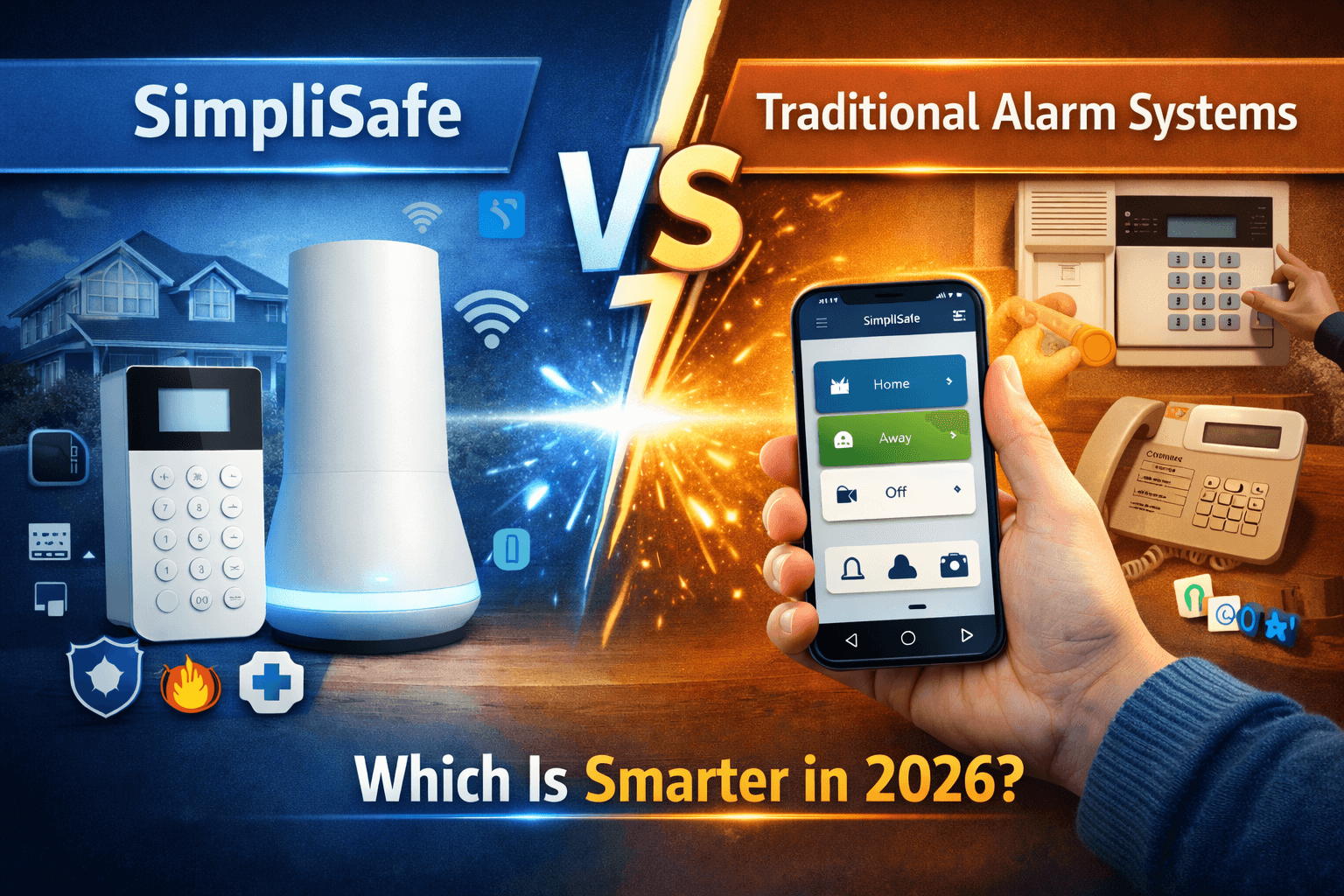
SimpliSafe versus Traditional Alarm System
Feb 06 2026
Home security has evolved rapidly over the past decade. While traditional alarm systems once dominated the market, modern DIY systems like SimpliSafe are reshaping how homeowners protect their properties.
So in 2026, which option is smarter, a traditional alarm system or SimpliSafe?
Let’s break down the differences in technology, cost, flexibility, installation, and long-term value so you can make the right choice.
What Is a Traditional Alarm System?
Professional security companies typically install traditional alarm systems. They often include:
Hardwired sensors
A central control panel
Professional installation
Long-term monitoring contracts
Fixed monthly fees
Many legacy providers require 2–5 year contracts and may charge installation and equipment fees upfront.
These systems are reliable, but they haven’t evolved as quickly as modern smart security solutions.
What Is SimpliSafe?
SimpliSafe is a DIY home security system designed for easy setup and flexible monitoring. It offers:
Wireless sensors
Cellular backup
Professional or self-monitoring options
No long-term contracts
Smart home integration
Mobile app control
It’s built for modern households that want flexibility and smart features without complicated installations.
Installation: DIY vs Professional Setup
Traditional Alarm Systems
Installed by technicians
Requires drilling and wiring
Installation fees often apply
Scheduling appointments required
SimpliSafe
DIY installation in under an hour
No drilling required (adhesive sensors available)
Portable if you move
No installation fees
Winner in 2026: SimpliSafe
Modern homeowners prefer convenience and flexibility.
Contracts & Flexibility
Traditional Systems
Multi-year contracts
Early termination penalties
Limited plan changes
SimpliSafe
No contracts
Cancel anytime
Switch monitoring plans freely
In 2026, flexibility is a major priority, especially for renters and frequent movers.
Smarter Option: SimpliSafe
Monitoring & Emergency Response
Both options offer 24/7 professional monitoring with police, fire, and medical dispatch.
However, SimpliSafe adds modern upgrades like:
Cellular backup
Video verification (with an interactive plan)
App-based emergency alerts
Traditional systems may still rely heavily on landlines or older communication systems, depending on the provider.
Edge: SimpliSafe for modern communication technology.
Smart Features & App Control
This is where the biggest difference appears.
Traditional Alarm Systems
Basic keypad control
Limited mobile features
Fewer smart integrations
SimpliSafe
Mobile app control
Remote arm/disarm
Real-time push notifications
Live camera viewing
Smart home compatibility
SimpliSafe integrates with:
Amazon Alexa
Google Assistant
Voice control and smart automation make it more aligned with modern smart homes.
Clear Winner: SimpliSafe
Equipment & Technology
Traditional Systems
Often hardwired
Equipment upgrades may require technician visits
Slower innovation cycles
SimpliSafe
Wireless technology
Easy sensor expansion
Regular feature updates
Modern indoor & outdoor cameras
Wireless technology also makes SimpliSafe easier to relocate.
Cost Comparison in 2026
Traditional Alarm Systems
Installation fees
Equipment costs
Contract-based monitoring
Higher monthly fees
SimpliSafe
Lower upfront equipment cost
Affordable monthly monitoring
No hidden cancellation fees
Self-monitoring option available
Over 3–5 years, traditional systems often cost significantly more due to contracts and service fees.
Better Value: SimpliSafe
Check out the SimpliSafe plans now and select the one that suits you more.
Security During Power or Internet Outages
Both systems offer backup protection, but SimpliSafe’s cellular monitoring ensures your system remains active even if Wi-Fi fails.
This makes it highly reliable during outages or attempts to interfere with the internet.
Who Should Choose Traditional Alarm Systems?
Traditional systems may still be suitable for:
Large commercial properties
Users who prefer technician-managed systems
Homes requiring advanced hardwired infrastructure
They are dependable but less flexible.
Who Should Choose SimpliSafe?
SimpliSafe is ideal for:
Renters
First-time homeowners
Smart home users
Budget-conscious families
Frequent travelers
People who want no contracts
In short, it suits modern lifestyles.
Which Is Smarter in 2026?
In 2026, “smart” means:
Flexible
Mobile-controlled
Affordable
Contract-free
Integrated with smart homes
SimpliSafe checks all these boxes.
Traditional alarm systems still offer solid protection, but they lack the innovation, flexibility, and convenience today’s homeowners expect.
Final Verdict
When comparing SimpliSafe vs traditional alarm systems, SimpliSafe stands out as the smarter choice for most homes in 2026.
It combines:
Smart technology
Affordable monitoring
No long-term contracts
Easy DIY installation
App-based control
Traditional systems may still work well for specific needs, but for the average homeowner looking for modern security without long-term commitments, SimpliSafe delivers better overall value and smarter functionality.