
Parallels Desktop versus Boot Camp
Jan 13 2026
If you’re a Mac user who needs Windows applications, you’ve likely come across two major options: Parallels Desktop and Boot Camp. Both allow you to use Windows on a Mac, but they work in completely different ways.
So which one should you choose?
In this detailed comparison, we’ll break down performance, ease of use, gaming capabilities, Apple Silicon compatibility, pricing, and real-world usability to help you make the right decision.
What Is Boot Camp?
Boot Camp is Apple’s built-in utility that allows Intel-based Macs to install Windows alongside macOS. It uses dual-boot technology, meaning you must restart your Mac and choose either macOS or Windows at startup.
Important: Boot Camp is only available on Intel Macs and is not supported on Apple Silicon (M1, M2, M3) Macs.
What Is Parallels Desktop?
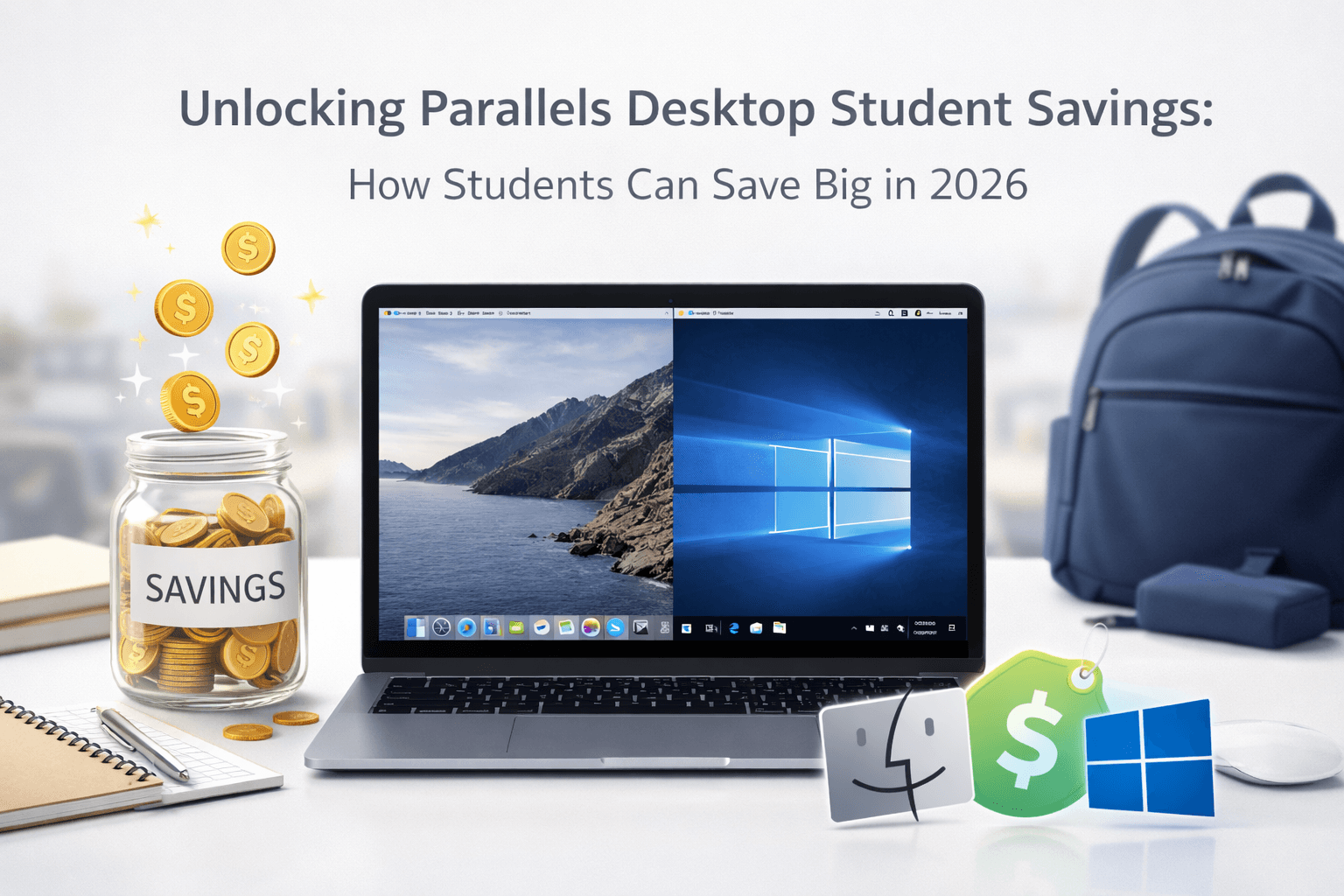
Parallels Desktop is virtualisation software that lets you run Windows inside macOS without restarting your computer. Windows operates in a virtual machine, allowing both operating systems to run simultaneously.
It supports:
Intel Macs
Apple Silicon Macs (M1, M2, M3)
Windows 11 ARM
Linux distributions
This flexibility makes it the primary solution for modern Mac users.
Key Differences Between Parallels and Boot Camp
Installation & Setup
Boot Camp
Requires manual partitioning of your drive
Requires Windows ISO setup
Takes longer to configure
Must reboot to switch systems
Parallels Desktop
Automated Windows installation
Beginner-friendly interface
No partitioning required
No reboot needed
Winner: Parallels Desktop (for simplicity)
Performance
Boot Camp Performance
Because Boot Camp runs Windows natively on your hardware, it delivers maximum performance. Your Mac’s full CPU, GPU, and RAM are dedicated to Windows while booted into it.
This makes Boot Camp better for:
High-end gaming
Intensive 3D rendering
GPU-heavy applications
Parallels Performance
Parallels shares system resources between macOS and Windows. For productivity, development, and general software use, performance is excellent.
However, for graphics-heavy gaming, it may not match Boot Camp’s native performance.
Winner:
Gaming → Boot Camp
Productivity & multitasking → Parallels
Gaming Capability
Boot Camp is better for serious gaming because it runs Windows directly on the hardware.
Parallels supports DirectX 11 and OpenGL, but:
Some AAA games may struggle
Performance depends heavily on RAM and GPU
Not ideal for competitive gaming
If gaming is your priority and you have an Intel Mac, Boot Camp is stronger.
Apple Silicon Compatibility
This is where the biggest difference exists.
Boot Camp:
Not supported on M1, M2, or M3 Macs
Parallels Desktop:
Fully optimised for Apple Silicon
Supports Windows 11 ARM
Actively maintained and updated
If you own a modern Mac, Parallels is your only practical option.
Winner: Parallels Desktop
Ease of Switching Between Systems
Boot Camp:
Requires a full system restart
You can only use one OS at a time
Parallels:
Run macOS and Windows side-by-side
Copy/paste between systems
Drag-and-drop files
Use Windows apps from the Mac Dock (Coherence Mode)
Winner: Parallels Desktop
Cost Comparison
Boot Camp:
Free (built into macOS)
Requires a Windows license purchase
Parallels Desktop:
Subscription-based pricing
Windows license is required separately
Boot Camp wins in pure cost terms, but it lacks modern compatibility and convenience.
Resource Usage
Boot Camp:
Uses full hardware when booted
No macOS background processes
Parallels:
Shares CPU and RAM
Requires at least 16GB RAM for best performance
Can consume more system resources during multitasking
If you have limited RAM (8GB), Boot Camp may perform better on Intel Macs.
Side-by-Side Comparison
Feature | Parallels Desktop | Boot Camp |
Works on Apple Silicon | Yes | No |
Requires Restart | No | Yes |
Best for Gaming | Moderate | Excellent |
Multitasking | Excellent | Not possible |
Ease of Setup | Very Easy | Moderate |
Cost | Paid Subscription | Free |
Business Use | Strong | Limited |
Who Should Choose Boot Camp?
Choose Boot Camp if:
You own an Intel Mac
You primarily play Windows games
You need full native hardware performance
You don’t mind rebooting
Who Should Choose Parallels Desktop?
Choose Parallels if:
You own an Apple Silicon Mac
You want to run Windows and macOS simultaneously
You need Windows for productivity, development, or business apps
You prefer convenience over raw gaming power
Final Verdict
If you’re using a modern Mac with Apple Silicon, the decision is easy, Parallels Desktop is the only viable option.
If you own an older Intel Mac and prioritise gaming or maximum performance, Boot Camp may still be useful.
However, for most professionals, students, and business users who need flexibility and multitasking, Parallels Desktop offers a more practical and seamless experience.
In 2026, Parallels remains the better overall solution for running Windows on Mac, especially as Boot Camp fades into legacy status.
Run Windows on your Mac the smarter way. Choose: the solution that fits your workflow today.
FAQs
Is Boot Camp still available on new Macs?
No, Boot Camp is not supported on Apple Silicon Macs.
Does Parallels slow down Mac performance?
It can use significant resources, but with 16GB RAM or more, performance remains smooth.
Which is better for gaming?
Boot Camp performs better for high-end gaming on Intel Macs.
Do both require a Windows license?
Yes, both require you to purchase Windows separately.