
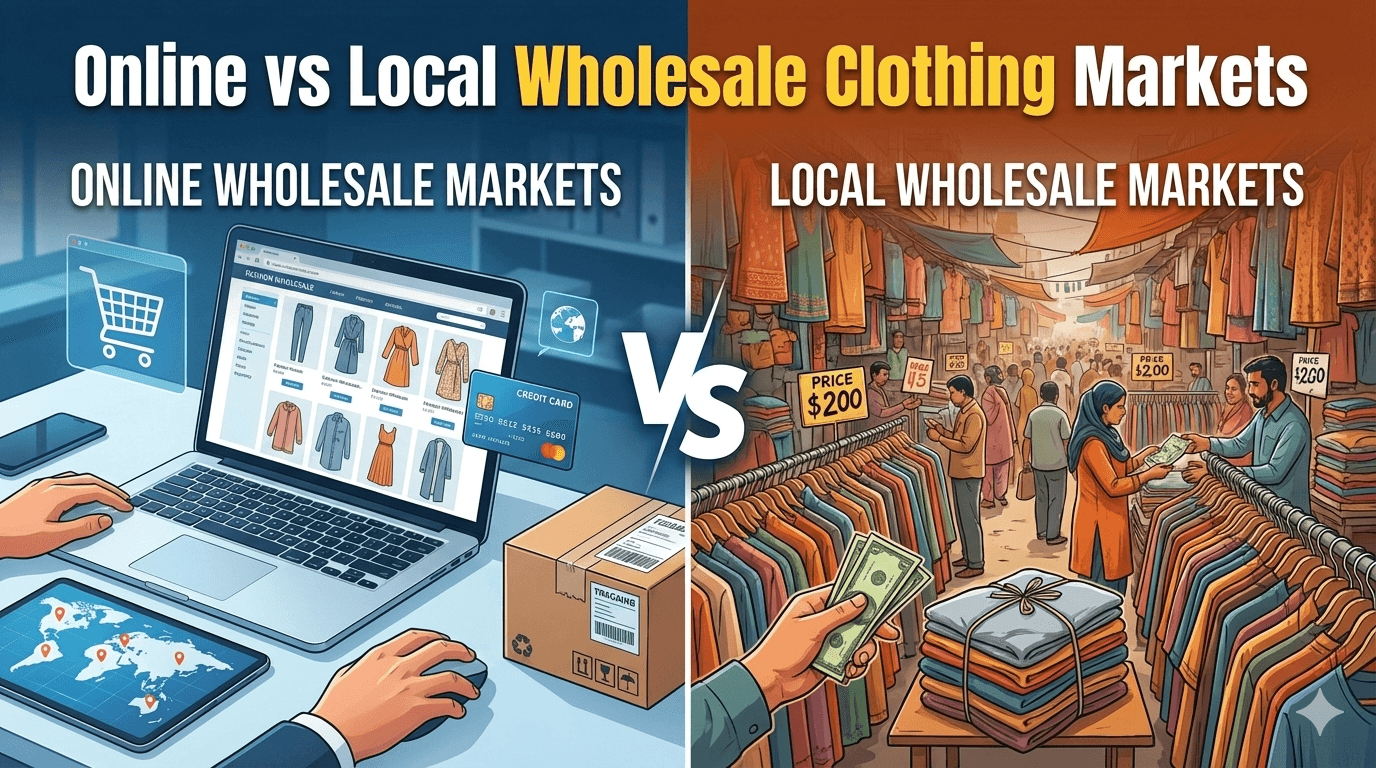
Online vs Local Wholesale Clothing Markets
Jan 23 2026
Choosing the right wholesale clothing market is a critical decision for fashion retailers and boutique owners. With the rise of digital sourcing platforms, business owners now face a common question: Should you buy from online wholesale clothing markets or continue sourcing from local wholesale hubs?
Both options offer distinct advantages and limitations. Understanding how they compare can help you make informed sourcing decisions that align with your business goals, budget, and growth plans.
Check out all the latest deals at FashionGo by clicking here.
Understanding Online Wholesale Clothing Markets
Online wholesale clothing markets are digital platforms that connect retailers with manufacturers, brands, and distributors from around the world. These platforms allow buyers to browse catalogues, place orders, and manage vendor communication remotely.
Common features of online wholesale markets include:
Access to thousands of vendors in one place
Detailed product listings with images and specifications
Digital ordering and payment systems
Vendor messaging and order tracking tools
Online wholesale platforms have become popular due to their convenience and scalability.
Understanding Local Wholesale Clothing Markets
Local wholesale clothing markets are physical locations where retailers can purchase inventory directly from nearby suppliers. These markets often operate within fashion districts, trade hubs, or wholesale centres.
Typical characteristics of local wholesale markets include:
In-person product inspection
Face-to-face negotiations with vendors
Immediate stock availability
Local delivery or pickup options
Many traditional retailers still rely on local markets for hands-on sourcing and relationship building.
Product Variety and Selection
Product selection is one of the biggest differences between online and local wholesale markets.
Online Wholesale Markets
Online platforms typically offer:
A wider range of styles and categories
Access to international brands and manufacturers
Seasonal and trend-driven collections
Niche and speciality product options
This variety makes online sourcing ideal for retailers seeking differentiation.
Local Wholesale Markets
Local markets usually provide:
Limited selection based on local demand
Faster access to trending regional styles
Fewer niche or international brands
Local sourcing may work well for businesses focused on familiar or region-specific products.
Pricing and Cost Considerations
Pricing structures vary significantly between online and local wholesale markets.
Online Wholesale Markets
Online sourcing often includes:
Competitive pricing due to global competition
Bulk discounts and tiered pricing
Additional shipping and import costs
Potential currency exchange fees
Lower product costs may be offset by logistics expenses.
Local Wholesale Markets
Local sourcing usually offers:
Lower shipping or transport costs
No import duties or customs fees
Limited pricing flexibility due to fewer suppliers
Prices may be slightly higher per unit, but easier to manage overall.
Quality Control and Product Inspection
Quality assurance is a major concern for wholesale buyers.
Online Wholesale Markets
Online sourcing requires trust and due diligence, including:
Reviewing product images and descriptions
Ordering samples before bulk purchases
Communicating clearly with vendors
Accepting limited pre-purchase inspection
Quality issues may only be discovered after delivery.
Local Wholesale Markets
Local markets allow buyers to:
Inspect fabrics, stitching, and finishes in person
Verify sizing and colour accuracy
Select inventory directly
This hands-on approach reduces the risk of quality issues.
Convenience and Time Efficiency
Time management plays an important role in sourcing decisions.
Online Wholesale Markets
Online platforms provide:
24-hour access to vendors and catalogues
Faster comparison between multiple suppliers
No travel or physical presence required
This makes online sourcing ideal for growing and remote businesses.
Local Wholesale Markets
Local sourcing often involves:
Travel to wholesale hubs
Limited operating hours
Time spent negotiating in person
While time-consuming, it can strengthen vendor relationships.
Vendor Relationships and Communication
Building strong supplier relationships is essential for long-term success.
Online Wholesale Markets
Online relationships typically rely on:
Messaging systems and email communication
Transaction-based interactions
Limited personal connection
Some platforms still support long-term partnerships with consistent ordering.
Local Wholesale Markets
Local sourcing encourages:
Face-to-face communication
Strong personal relationships
Easier negotiation and conflict resolution
This can lead to better terms and priority access.
Scalability and Business Growth
Your sourcing method should support your growth plans.
Online Wholesale Markets
Online platforms support scalability through:
Access to a larger production capacity
Easier reordering and inventory expansion
Multiple suppliers for diversification
This makes them ideal for e-commerce brands and multi-location retailers.
Local Wholesale Markets
Local markets may limit growth due to:
Smaller production volumes
Limited supplier options
Dependence on local availability
They may suit small or regional businesses better.
Risk and Reliability Factors
Each method of sourcing has its own risk.
Online Wholesale Markets
Risks that could be posed include:
Shipping delays
Import complications and customs
Quality is inconsistent across vendors.
The proper vetting procedure can help to reduce the risks.
Local Wholesale Markets
Local sourcing risks can be:
Limited backup suppliers
Stock shortages during peak seasons
More reliance on specific vendors
A variety of providers can be helpful to with these problems.
What Wholesale Market Is Right for You?
The right choice will depend on your company's model and objectives.
Wholesale markets online are more beneficial for those who want:
More diverse product range
Options for scaling sourcing
Global supplier access
The local wholesale market is superior when you need:
Quality inspection performed by hands
Strong personal vendor relationships
Local fulfilment that is faster
Many successful retailers utilise the combination of both to achieve a balance between flexibility and dependability.
Final Thoughts
Local and online wholesale clothing markets offer distinct advantages. Online marketplaces offer size flexibility, convenience, and variety as well as local markets that offer the ability to control your own personal relationships and quick access.
Knowing how each option is aligned with your company's requirements will allow you to create an intelligent, more durable strategy for sourcing.
If you're looking into wholesale sourcing options, begin by looking at your budget, needs for inventory and growth objectives. Try both local and online markets using small-scale orders to discover the best equilibrium for your business.
What are the primary benefits of wholesale online markets?
They have a greater range of options, better time-savings and competitive prices.
How do FashionGo contrast to the local style marts?
FashionGo offers a wider range of vendors without the need to travel or set schedules.
Are prices more competitive locally or online?
Platforms like FashionGo generally offer better than competitive prices.
Does FashionGo provide more variety of products than local stores?
Yes, it has hundreds of vendors in several categories.
How does shipping cost compare to sourcing in person?
Shipping costs are typically less than travel and logistics costs.
Which is the best option for the scalability of boutique companies?
Wholesale markets online are more flexible than local sources.