
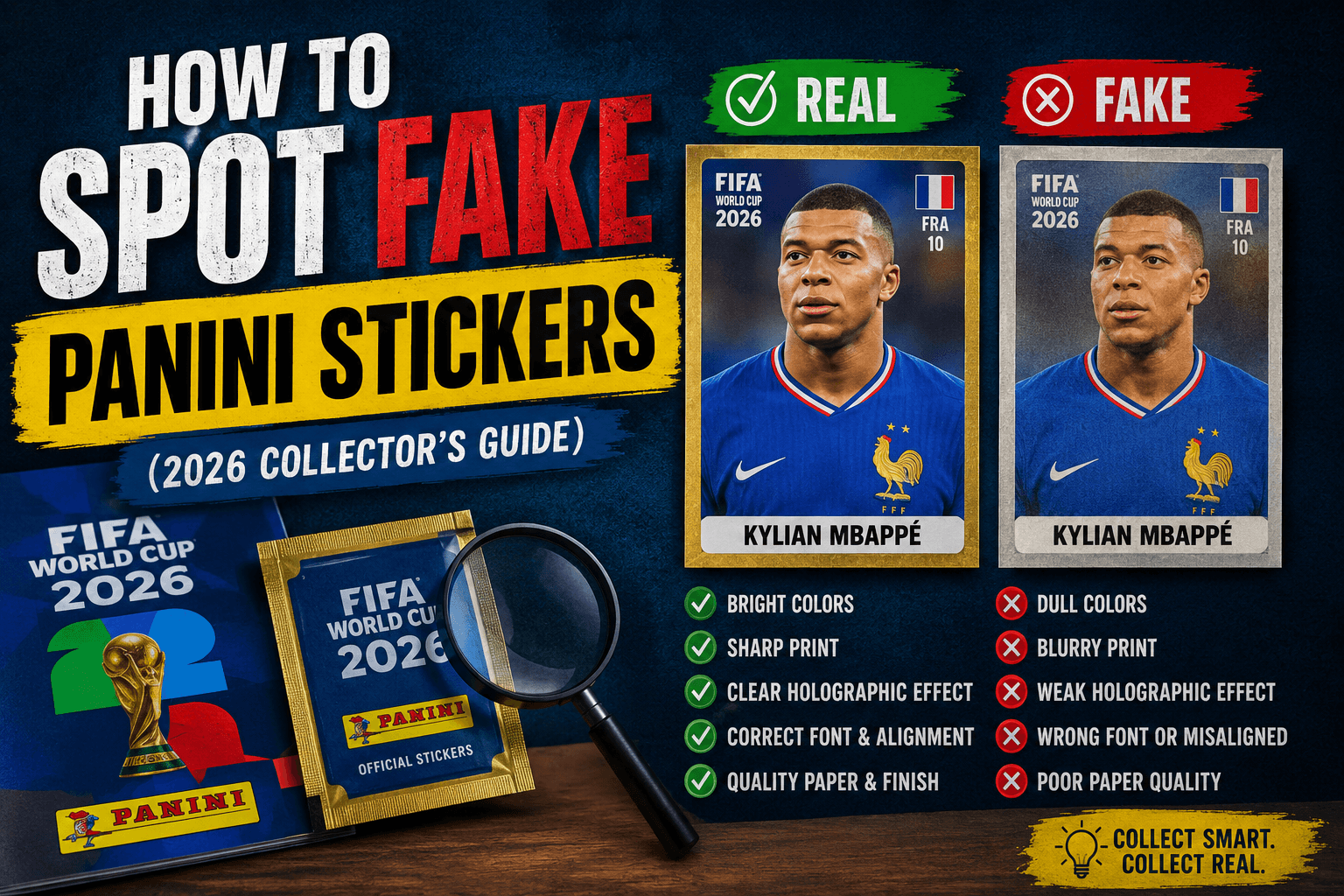
How to Spot Fake Panini Stickers
Feb 18 2026
Fake Panini stickers have become a major problem in the football collectibles market. As rare World Cup stickers and vintage albums continue rising in value, counterfeiters are producing increasingly convincing replicas to target collectors.
Whether you are buying a vintage Pelé sticker, a Lionel Messi rookie, or a sealed World Cup pack, knowing how to identify fake Panini stickers can save you from losing serious money.
In this complete collector’s guide, you’ll learn:
The most common signs of fake Panini stickers
How counterfeiters trick buyers
Differences between authentic and fake stickers
Red flags when buying online
Tips for verifying rare World Cup collectibles
Why Fake Panini Stickers Are Increasing
The football collectibles market exploded after the 2018 and 2022 FIFA World Cups.
Rare Panini stickers now regularly sell for:
Hundreds of dollars
Thousands of dollars
Even six figures for ultra-rare items
That growth has created a huge counterfeit market.
High-demand targets include:
Vintage World Cup stickers
Messi rookie stickers
Cristiano Ronaldo rookies
Maradona collectibles
Pelé vintage releases
Limited-edition parallels
Sealed Panini boxes and packs
Modern printing technology has also made fakes harder to detect than ever before.
The Most Common Types of Fake Panini Stickers
Reprinted Vintage Stickers
These are modern copies made to look old.
Counterfeiters often artificially age them using:
Coffee stains
Sun fading
Bent corners
Fake wear marks
Vintage World Cup stickers from the 1970s and 1980s are especially targeted.
Fake Parallel Stickers
Modern Panini releases include:
Gold parallels
Black borders
Holographic versions
Limited serial-numbered editions
Because these variants are valuable, counterfeiters frequently create fake “rare” versions from standard stickers.
Trimmed Stickers
Some sellers cut sticker edges to improve centring and grading appearance.
This is extremely common in high-value collectibles.
Signs include:
Uneven borders
Sharp edge inconsistencies
Missing factory cuts
Fake Graded Slabs
Some scammers even counterfeit PSA or BGS slabs.
They may:
Clone certification numbers
Use fake labels
Create fake QR codes
Copy real auction photos
Always verify grading numbers directly on official databases.
How to Tell if a Panini Sticker Is Fake
Check the Print Quality
Authentic Panini stickers usually have:
Sharp player details
Clean text
Consistent colors
High-quality image resolution
Fake stickers often look:
Blurry
Oversaturated
Pixelated
Too glossy or too dull
Use magnification if possible.
Professional collectors often inspect stickers under strong LED lighting.
Examine the Back Carefully
The back of a sticker reveals a lot.
Check for:
Correct fonts
Proper numbering
Authentic Panini branding
Consistent paper texture
Accurate colour tones
Counterfeit backs frequently have:
Wrong shades
Misaligned printing
Thin paper stock
Incorrect fonts
Feel the Sticker Texture
Authentic Panini stickers usually have a very specific paper texture and thickness.
Fake stickers may feel:
Too smooth
Too glossy
Too thin
Too stiff
Vintage Panini stickers especially have distinctive paper stock that experienced collectors recognise immediately.
Compare Dimensions
Counterfeit stickers are often slightly off-size.
Even tiny measurement differences matter.
Use:
Digital calipers
Precision rulers
Side-by-side comparisons
A difference of even 1–2 mm can be a major red flag.
Look for Incorrect Colours
Many fake stickers fail to match the original printing colours.
Common problems include:
Skin tones appear unnatural
Team colors looking too bright
Black borders appear faded
Incorrect saturation
Comparing against verified examples helps tremendously.
How to Verify Graded Panini Stickers
PSA Verification
Always check:
Certification number
Population report
Matching sticker image
Grade consistency
If the slab image online doesn’t match the seller’s sticker, walk away immediately.
Beckett Verification
Beckett slabs should also match:
Label design
Certification data
Grading details
Fake slabs often have small font inconsistencies or incorrect holograms.
Red Flags When Buying Panini Stickers Online
Prices That Are Too Good to Be True
If a rare Messi rookie sticker is listed at 10% of market value, there is usually a reason.
Scammers rely on urgency and excitement.
Poor Seller Feedback
Avoid sellers with:
Low ratings
Limited history
Repeated authenticity complaints
Stock Photos Instead of Real Photos
Always request:
Front images
Back images
Close-up corners
Surface detail photos
Real collectors understand why authenticity matters.
Suspicious Lighting or Filters
Heavy editing can hide:
Surface damage
Reprints
Trimming
Gloss inconsistencies
No Return Policy
A trustworthy seller usually offers some form of buyer protection.
The Safest Places to Buy Panini Stickers
Trusted Marketplaces
eBay Authenticity Guarantee
Goldin Auctions
PWCC Marketplace
Major card shows
Reputable hobby shops
Collector Communities
Reddit collector groups and hobby forums can also help identify suspicious listings.
Popular communities include:
r/Panini
r/soccercards
Blowout Forums
Collectors frequently expose fake listings before scams spread widely.
Are Sealed Panini Packs Safer?
Usually, but not always.
Some scammers:
Reseal packs
Weigh packs
Replace contents
Fake wrapping
Watch for:
Damaged seals
Loose packaging
Glue marks
Unusual folds
Vintage sealed products are especially risky without authentication.
Expert Tips From Serious Collectors
Buy the Seller First
Experienced collectors often say:
“Buy the seller, not the sticker.” Reputation matters enormously.
Learn Before Spending Big
Study:
Genuine examples
Auction archives
Grading databases
Collector forums
Knowledge is your best protection.
Use Grading for High-Value Stickers
Professional grading helps:
Authenticate
Protect
Increase resale trust
Especially important for:
Vintage stickers
Rare parallels
Rookie collectibles
Keep Proof of Purchase
Save:
Receipts
Auction screenshots
Seller messages
Authenticity documents
This helps future resale value.
The Future of Fake Panini Stickers
Counterfeits are becoming more sophisticated every year.
AI-enhanced printing and advanced scanning technology now allow scammers to create highly convincing replicas.
At the same time, authentication technology is improving too:
Better grading verification
Digital databases
AI image matching
Enhanced slab security
Collectors who stay informed will always have the advantage.
Final Thoughts
Panini sticker collecting is one of football’s most exciting hobbies, but it comes with risks.
The more valuable stickers become, the more counterfeit products appear on the market.
The good news is that most fake Panini stickers still reveal themselves through:
Print quality
Texture
Measurements
Seller behavior
Authentication inconsistencies
Patience, research, and careful buying habits are the best ways to protect your collection.
For serious collectors, knowledge is every bit as valuable as the stickers themselves.