
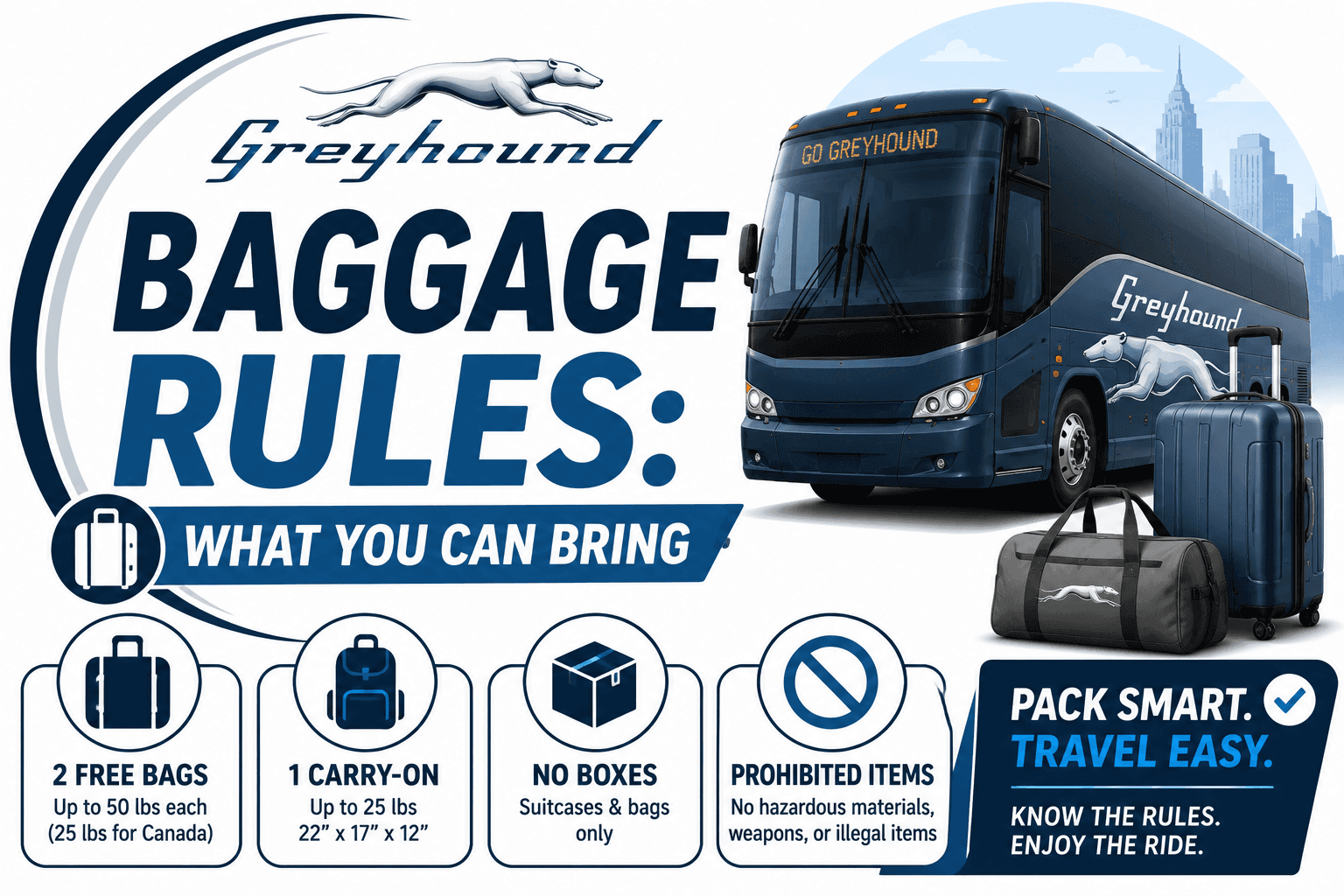
Greyhound baggage rules what you can bring
May 05 2026
A standard Greyhound ticket includes one carry-on and one checked bag free, with size and weight limits that the driver enforces at the bus. Extra, oversized, or overweight bags cost a fee that varies by route and fare type. Carry cash for baggage charges, because curbside payment by card is not guaranteed. Weigh and measure before you leave home.
Free: one carry-on plus one checked bag within limits. Paid: extra bags, oversized, or overweight. Enforcement happens at the bus and it is strict. Pack to the allowance, label your bags, keep valuables on you, and bring cash for any fee.
Click here to know what you can bring
The free baggage allowance
On a standard ticket, Greyhound includes one carry-on bag and one checked bag at no extra cost. The carry-on goes in the overhead area or under the seat in front of you. The checked bag goes in the luggage hold under the coach. This mirrors the FlixBus-branded allowance, since the two brands now run on one system.
Each piece has a size and weight cap. Stay inside it and you pay nothing. Go over, and you are into fee territory, which the driver decides at the curb. The exact limits and per-bag fees can vary by route and fare type, so confirm your specific trip's rules when you book.
Carry-on vs Checked: What Goes Where
Bag type | Where it goes | Rule of thumb |
Carry-on | Overhead shelf or under the seat ahead | Keep it small enough to lift and stow yourself |
Checked bag | Luggage hold under the coach | Within the size and weight cap to travel free |
Extra bags | Hold, space permitting, for a fee | Pay in advance where possible to avoid curbside hassle |
Personal item | On you or at your feet | Phone, wallet, documents, medication stay with you |
Click here to travel stress-free
Oversized and overweight bags
This is where most fees and arguments happen. A bag over the weight cap or beyond the size limit triggers an extra charge, and the driver enforces it at the bus. Riders have been told to pay on the spot or leave a bag behind when it ran oversized. There is no scale at every curb, which leads to disputes, so do not gamble on a borderline bag.
Weigh and measure at home. If you know a bag is heavy, either redistribute weight across your free pieces or budget for the fee in advance. Sports equipment, instruments, and similar oversized items have their own handling rules and fees, so check before you show up with them.
Bring cash Drivers at the curb do not always accept cards for baggage fees. A traveller with an oversized bag and no cash can be forced to leave it or miss the bus. Carry enough cash to cover a possible fee, every trip.
What you cannot bring
Standard prohibited-item rules apply. Hazardous materials, flammables, weapons, and illegal items are not allowed. Alcohol is restricted. Each passenger is responsible for the contents of their bags. When in doubt about a specific item, check the current policy before travel rather than risking removal at the gate.
Travelling with special items
Pets
Service animals are accommodated under the applicable rules. General pet policies for non-service animals are limited on intercity coaches, so confirm the current rule before assuming you can bring an animal. Do not show up with a pet unverified.
Mobility and medical equipment
Wheelchairs, mobility aids, and necessary medical equipment are handled under accessibility provisions and generally do not count against your standard allowance. Arrange any assistance in advance where possible.
Strollers and child gear
Families travelling with young children can usually bring necessary child equipment, often handled separately from the standard bag count. Confirm the specifics for your route when booking.
Smart packing for a Greyhound trip
Stay within the free allowance. One carry-on, one checked bag, both within limits. That is your cheapest path.
Label every bag. Name and contact inside and out. The hold gets crowded and bags look alike.
Keep valuables on you. Phone, wallet, documents, medication, and electronics ride in your personal item, never in the hold.
Weigh and measure at home. Avoid the curbside surprise that costs cash or a left-behind bag.
Carry cash for fees. Curbside card payment is not guaranteed.
Watch your bag at stops. Theft from the hold happens. Step out at rest stops and keep an eye on loading.
A note on bag security
Budget coach travel carries a real, if small, risk of luggage going missing from the hold during stops. Riders have reported bags taken at intermediate stations. Keep anything you cannot afford to lose in your carry-on, label your checked bag clearly, and stay aware when the hold is open at stops. This is the strongest argument for travelling light on these routes.
Know more about Security guide
FAQs
How many bags can I bring on Greyhound for free?
A standard ticket includes one carry-on and one checked bag free, each within Greyhound's size and weight limits. Extra bags cost a fee that varies by route and fare type.
What is the weight limit for Greyhound checked bags?
Checked bags must stay within Greyhound's posted weight and size cap to travel free. Overweight or oversized bags trigger an extra charge enforced at the bus, so weigh yours before you travel and confirm your route's exact limit at booking.
Does Greyhound charge for extra luggage?
Yes. Bags beyond the free carry-on and checked allowance, or any oversized or overweight bag, incur a fee. The amount varies by route and fare type, and curbside card payment is not guaranteed, so carry cash.
Can I bring a carry-on and a personal item on Greyhound?
Yes. Your carry-on stows overhead or under the seat, and a personal item like a bag with your phone, wallet, and documents stays with you. Keep valuables on you rather than in the hold.
Is luggage safe in the Greyhound hold?
Mostly, but theft from the hold at stops has been reported. Label your checked bag, keep valuables in your carry-on, and stay aware when the hold is open at intermediate stops.