
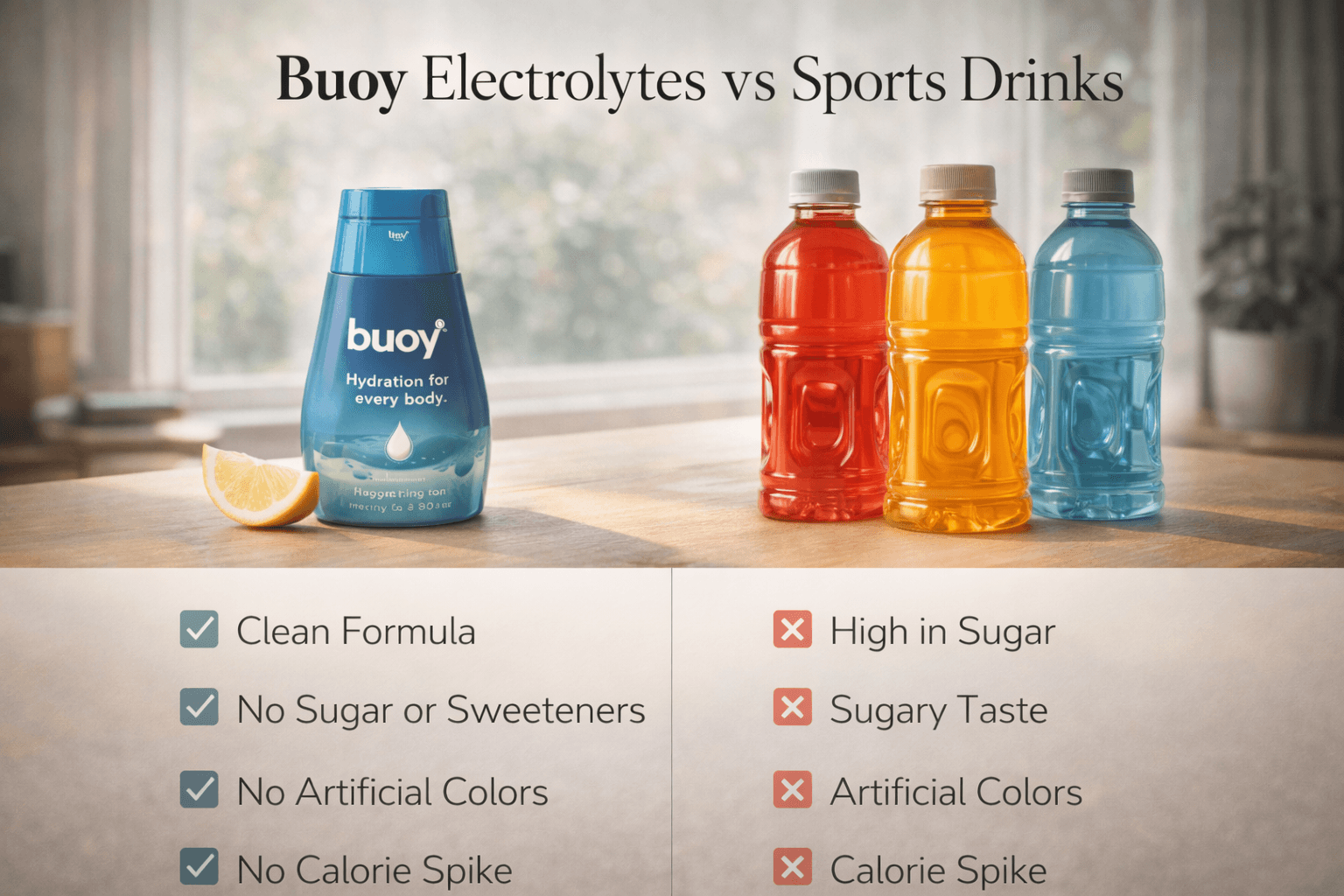
Buoy Electrolytes versus Sports Drinks
Jan 07 2026
We’ve all been told that if we’re feeling tired, dizzy, or "foggy," we’re probably dehydrated. Naturally, the first thing many of us reach for is a brightly colored sports drink from the local gas station. They promise to "refuel" and "rehydrate," but as we learn more about what goes into our bodies, many people are asking: Is there a better way?
In 2026, the trend has shifted away from sugary, neon beverages toward "clean" hydration. Buoy Hydration Drops have become the face of this movement. But how do they actually stack up against the classic sports drinks we’ve used for decades?
This guide compares Buoy Electrolytes vs. Sports Drinks to help you decide which one actually deserves a spot in your gym bag (or your coffee cup).
The Core Difference: What’s Inside?
The most obvious difference between Buoy and traditional sports drinks is the ingredient list.
Traditional Sports Drinks
Sports drinks like Gatorade or Powerade were originally designed for elite athletes doing high-intensity exercise for hours. Because of this, they are loaded with:
Sugar: To provide quick energy (glucose) to tired muscles.
Dyes: To give them those signature blue, orange, and red colors.
Artificial Flavors: To mask the salty taste of electrolytes.
Buoy Hydration Drops
Buoy takes the opposite approach. It is a flavorless, unsweetened liquid concentrate designed to be added to any drink.
Zero Sugar/Sweeteners: No sugar, no stevia, and no monk fruit.
87+ Trace Minerals: Unlike sports drinks that only offer 2 or 3 minerals (usually just salt and potassium), Buoy includes a full spectrum of ocean-harvested minerals.
Vitamins & Antioxidants: It includes B vitamins and rosemary extract for an extra wellness boost.
Hydration Efficiency: The Science
You might think that a big bottle of sports drink would hydrate you better than a few drops in your water, but science suggests otherwise.
A 2026 university-led clinical study found that Buoy is 64% more hydrating than water alone and 49% more hydrating than a leading electrolyte competitor.
Why Buoy Wins on Absorption
Sports drinks often contain high amounts of sugar and artificial additives. While sugar can help with absorption in specific "rescue" scenarios, it can also cause a "diuretic effect" (making you pee more) or a sugar crash later.
Buoy uses highly bioavailable ionic minerals. Because the minerals are already dissolved in a liquid form, your body can absorb them almost instantly without needing to process heavy sugars or dyes.
Versatility: The "Any Drink" Advantage
One of the biggest "cons" of sports drinks is that you have to drink them. If you don’t want a 20-ounce bottle of fruit-punch-flavored liquid, you’re out of luck.
Buoy is built for your lifestyle, not the other way around.
Coffee & Tea: You can add Buoy to your morning latte to counteract the dehydrating effects of caffeine.
Smoothies & Juices: It blends perfectly into your breakfast.
Even Alcohol: Some users add it to cocktails or beer to help mitigate the dehydration that causes hangovers.
Comparing the Stats: Buoy vs. Sports Drinks
Feature | Buoy Hydration Drops | Standard Sports Drinks |
Calories | 0 | 130 - 150 (per bottle) |
Sugar | 0g | 30g+ |
Minerals | 87+ (Ionic Trace Minerals) | 2 (Sodium & Potassium) |
Portability | Pocket-sized bottle (40 servings) | Bulky 20oz plastic bottles |
Price per Serving | ~£0.25 - £0.40 | £1.50 - £2.50 |
Ingredients | Clean, natural, and vegan | Artificial colors and flavors |
Who Is Each One For?
While Buoy is the clear winner for daily health, sports drinks still have a small place in the world.
Stick to Sports Drinks if: You are an endurance athlete running a marathon or playing a 90-minute football match in 30°C heat. In these extreme cases, your body actually needs the high calories and sugar for immediate fuel.
Switch to Buoy if: You want better energy, clearer skin, and fewer headaches during your normal workday. It is perfect for low-to-moderate exercise, office workers, travelers, and people with chronic conditions like POTS or migraines who need consistent salt intake without the sugar rot.
Frequently Asked Questions (FAQs)
Does Buoy taste like salt?
If you put it in plain water, you might notice a very slight "minerally" or crisp taste, similar to high-end alkaline water. However, if you add it to coffee, juice, or a flavored sparkling water, it is virtually undetectable.
Is Buoy better for weight loss than sports drinks?
Yes. Since Buoy has zero calories and zero sugar, it won’t spike your insulin or add unnecessary calories to your day. It’s a great way to stay hydrated while practicing intermittent fasting or a keto diet.
Can kids use Buoy instead of sugary drinks?
Absolutely. Many parents in 2026 use Buoy to keep their kids hydrated during school or play without the "sugar high" and subsequent crash that comes from traditional kid-targeted beverages.
How many servings are in a bottle of Buoy?
Each small squeeze bottle contains 40 servings. One bottle of Buoy provides as many electrolytes as 13+ large bottles of sports drinks, making it much more eco-friendly and cheaper in the long run.
The Final Verdict
The era of "blue drink" hydration is coming to an end. Unless you are a professional athlete, mid-competition, the sugar and chemicals found in traditional sports drinks often do more harm than good.
Buoy Electrolytes offer a more sophisticated, healthy, and affordable way to stay hydrated. By providing a full spectrum of minerals without the junk, Buoy helps your body function at its best from your morning coffee to your evening wind-down.